

Why Rooftop Curbs May Not Be the Best Choice for VRF Equipment Support
Variable Refrigerant Flow (VRF) systems have become a popular choice for commercial buildings due to their energy efficiency, zoning flexibility, and scalable design. However, many projects still default to traditional rooftop curbs when supporting VRF condensers—an approach that was originally developed for packaged rooftop units rather than today's modular mechanical systems.
While rooftop curbs can seem like a straightforward solution, they often create challenges that impact the building long after installation is complete.
The Challenge with Rooftop Curbs
Unlike traditional rooftop units, VRF systems frequently consist of multiple condenser modules, extensive piping networks, and equipment layouts that may evolve over time. Rooftop curbs can concentrate these loads into limited areas of the roof structure, potentially increasing roof deck stress, deflection, and long-term maintenance concerns.
Curbs also introduce additional roof penetrations, which can create waterproofing challenges over the life of the building. As roofing systems age, flashing details and curb transitions can become common sources of leaks and repair costs.
Another consideration is future adaptability. VRF technology continues to evolve, and replacement equipment often does not match the dimensions of the original units. Modifying existing curbs or installing adapter curbs can add cost, downtime, and coordination challenges during future upgrades.
Why Structural Framing Systems Are Gaining Popularity
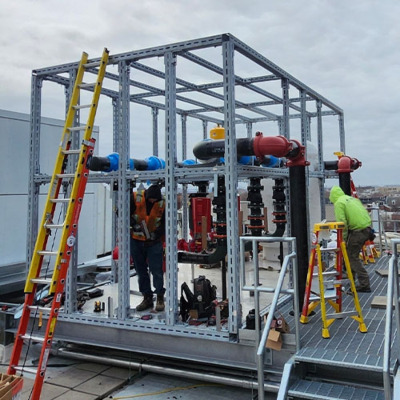
Many engineers, contractors, and building owners are moving toward engineered rooftop framing systems because they provide greater flexibility and improved load distribution. Structural framing can span between building supports, reduce concentrated loading, and create a more organized rooftop layout for equipment, piping, electrical systems, and maintenance access.
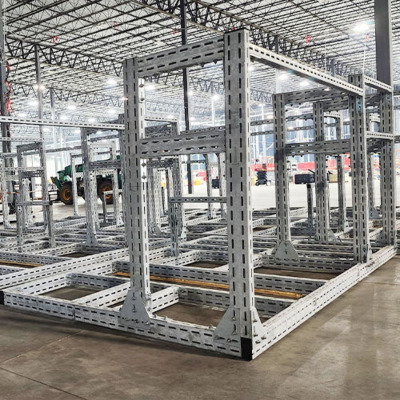
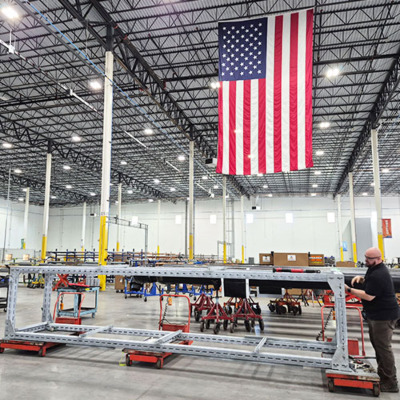
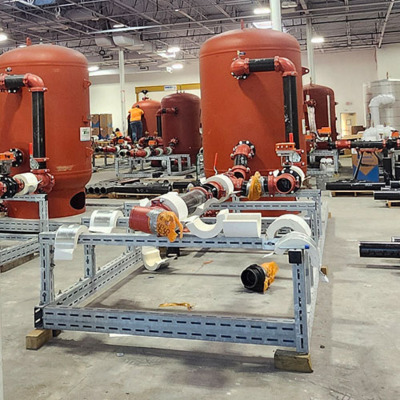
These systems also support modern prefabrication strategies, helping contractors reduce rooftop labor, minimize field modifications, and accelerate project schedules.
How NexSpan2™ Solves These Challenges
NexSpan2™ was developed specifically to address the demands of modern mechanical infrastructure. The modular, bolt-together framing system provides a flexible platform for supporting VRF equipment, pipe racks, walkways, and other rooftop systems.
By distributing loads across engineered framing assemblies rather than isolated curb locations, NexSpan2™ helps reduce structural stress while improving rooftop organization and serviceability. The system's adjustable design also makes it easier to accommodate future equipment changes without major roofing modifications.
In addition, NexSpan2™ supports prefabrication and rapid installation, eliminating the need for field welding and helping contractors reduce labor costs and installation time.
A Smarter Approach to VRF Support
As commercial construction continues to prioritize lifecycle value, adaptability, and faster installation methods, many project teams are rethinking traditional rooftop support methods. While rooftop curbs still have their place for certain applications, modern VRF systems often benefit from a more flexible and structurally efficient approach.
NexSpan2™ provides that solution—delivering engineered support, improved rooftop coordination, reduced roofing risk, and the adaptability needed for the next generation of commercial mechanical systems.
About the Author

Comments